
Electrical systems are the backbone of every modern business, but even a small electrical fault can lead to fire hazards, equipment breakdowns, and financial loss. At Shadow Energy Private Limited, we provide professional Electrical Safety Audit Services Noida designed to keep your facility safe, compliant, and operational—24/7.
Our Electrical Audit help you eliminate risks, improve system reliability, and ensure mandatory statutory compliance. With hands-on experience across factories, data centers, hospitals, warehouses, and commercial buildings, we bring real-world expertise and industry-tested methodologies to every audit.
Whether you manage a manufacturing plant, commercial building, hospital, or warehouse, ensuring electrical safety is not optional…it’s essential.
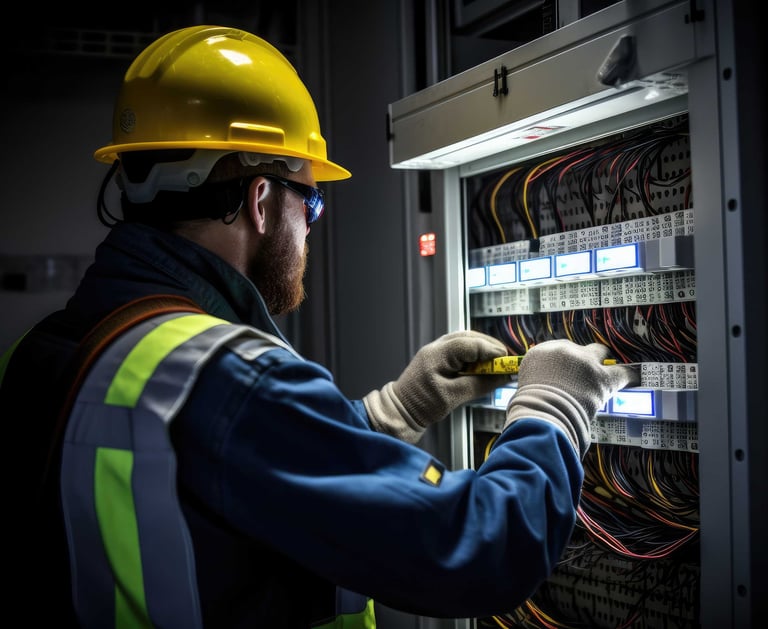
What Is an Electrical Safety Audit?
An Electrical Safety Audit (ESA) is a systematic, expert-led evaluation of a facility’s entire electrical infrastructure to identify potential hazards, compliance gaps, and performance issues. It ensures that all electrical installations, equipment, and safety practices meet mandated standards such as IEC, IS, OSHA, and NFPA 70E.
In simple terms, an electrical safety audit helps you detect risks before they cause shocks, fires, equipment failures, or downtime.
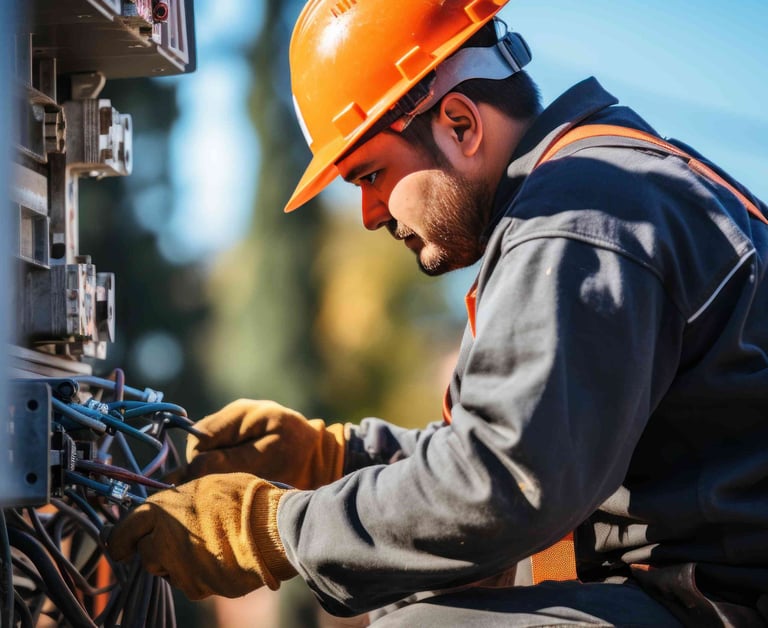
Our Electrical Audit Services
Electrical Inspection
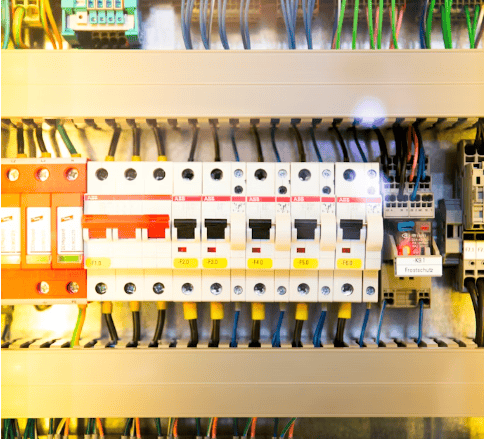
A thorough evaluation of electrical panels, cables, wiring, sockets, and distribution systems.
Using IR thermal cameras to detect hotspots invisible to the naked eye.
We test for resistance levels as per IS 3043 and ensure proper grounding for safety.
Using analyzers to study load balance, harmonics, voltage fluctuations, and overall efficiency.
Switchgear Inspection
Identifying faults in MCCs, PCCs, ACBs, MCBs, and other control devices.
Panel Board Testing
Checking insulation, connections, breakers, and earthing continuity.
Cable & Wiring Review
Ensuring proper sizing, insulation, routing, and safety compliance.
Hazard Identification
Spotting risks like arc flash points, corrosion, overheating, and poor maintenance.
Electrical Safety Compliance Audit
End-to-end compliance check based on national and international standards.
Purpose of an Electrical Audit
The goal of an electrical safety audit is to:
Prevent electrical accidents and fire hazards
Assess the condition, reliability, and safety of electrical equipment
Verify compliance with statutory safety and energy regulations
Evaluate risk levels and prioritize corrective actions
Improve system efficiency and reduce operational downtime
Why Choose Us?
Certified & Experienced Auditors: Our team includes BEE‑certified auditors, energy managers, and electrical safety experts.
Standards Compliance: In-depth audits based on IS, NEC, NFPA‑70E, IEC, CEA rules, and best practices.
Cutting‑edge Tools: We leverage digital twin modelling, infrared thermography, arc‑flash studies, load and short‑circuit simulations, relay coordination, and earthing system analysis.
Holistic Risk Approach: From visual inspection and documentation review to detailed equipment testing and personnel safety protocols.
Action‑oriented Reporting: Clear, prioritized remediation plans with BOQs and post‑audit follow‑up to ensure implementation.
Our Electrical Safety Audit Process
1. Pre‑Audit Planning
Gather facility layouts, electrical schematics, maintenance logs, incident history
Conduct pre‑audit survey and questionnaire to map audit scope
2. On‑Site Inspection & Testing
Visual audit of switchboards, cables, earthing pits, lightning arrestors
Infrared thermography to catch overheating connections
Load and overload detection with real-time measurements
3. Electrical Risk Analysis
Arc‑flash and short‑circuit studies to define safe boundaries, incident energy and PPE requirements
Simulation-based load flow and relay coordination using digital twin models
4. Documentation & Safety Protocol Review
Compliance checks against IS, NEC, NFPA, IEC, CEA
Review of lockout/tagout, permit systems, safety training records, accident logs
5. Reporting & Remediation
Clear, risk-prioritized findings with recommendations and BOQ
Safety training, earthing improvements, arc‑flash PPE guidance, lightning protection
Post‑audit follow‑ups verify corrective measures
4. Thermal Imaging
Capturing real-time hotspots using high-end thermal cameras.
5. Testing & Measurement
Using instruments such as:
Earth resistance testers
Insulation testers (Megger)
Power quality analyzers
Multimeters
6. Hazard Identification
We analyze the risks and document them category-wise.
7. Compliance Checking
Ensuring your system matches IS, IEC, NFPA, and NEC standards.
8. Corrective Action Recommendations
Practical, step-by-step solutions prioritizing safety and cost efficiency.
9. Final Audit Report
A complete report with:
Images
Thermal visuals
Risk matrix
Compliance score
Recommendations
Industries We Serve
Manufacturing industries
Commercial buildings
IT parks & data centers
Hospitals & laboratories
Hotels & hospitality
Educational institutions
Warehouses & logistics
Retail chains
Power plants
Automotive facilities
Loose and corroded connections
Overheating / hotspots
Overloaded circuits
Inadequate earthing
Arc flash risks
Improper cable sizing
Aged or damaged wiring
Faulty switchgear
Non-compliant panel boards
Fire-prone arrangements
Common Electrical Hazards We Identify
IEC Codes
NFPA 70E
OSHA Guidelines
NEC (National Electrical Code)
National Building Code
Compliance & Standards We Follow
Frequently Asked Questions (FAQs)
1. What is included in an electrical safety audit?
It includes inspection of wiring, panels, earthing, load analysis, thermal imaging, and compliance checks.
2. How often should a business conduct an electrical audit?
At least once a year or whenever installing new equipment.
3. Is thermal imaging necessary?
Yes, it detects invisible hotspots that can lead to fire hazards.
4. Do you follow IS and IEC standards?
Absolutely. Our audits comply with IS 3043, IS 732, IEC, NEC, and NFPA.
5. How long does an audit take?
Depending on the facility size, it usually takes 1–3 days.
6. What tools are used in the audit?
Thermal cameras, earth testers, insulation testers, and power quality analyzers.
7. Do you provide corrective actions?
Yes, we provide a complete corrective action roadmap.
8. Will the audit affect production?
No, audits are done without interrupting operations.
Get in touch


Address
Sector - 91 , Part - 1, Saraswati Colony, Sehatpur, Faridabad, Haryana 121003
Email: -info@shadowengy.com
© 2026. All rights reserved.
C-41, Pandav Nagar Complex Delhi, 110092
MIDC Industrial Area, Rabale, Mumbai, Maharashtra 400701
2nd Floor, B-52, Block-B, Sector 64, Noida, Uttar Pradesh 201301
Noida -
Delhi -
Faridabad -
Mumbai -
Our Services
Our Solutions
Earthing
APFC Panels
Energy Monitoring System
Servo Stabilizer
Power Control Centre Panel
Contact Us